
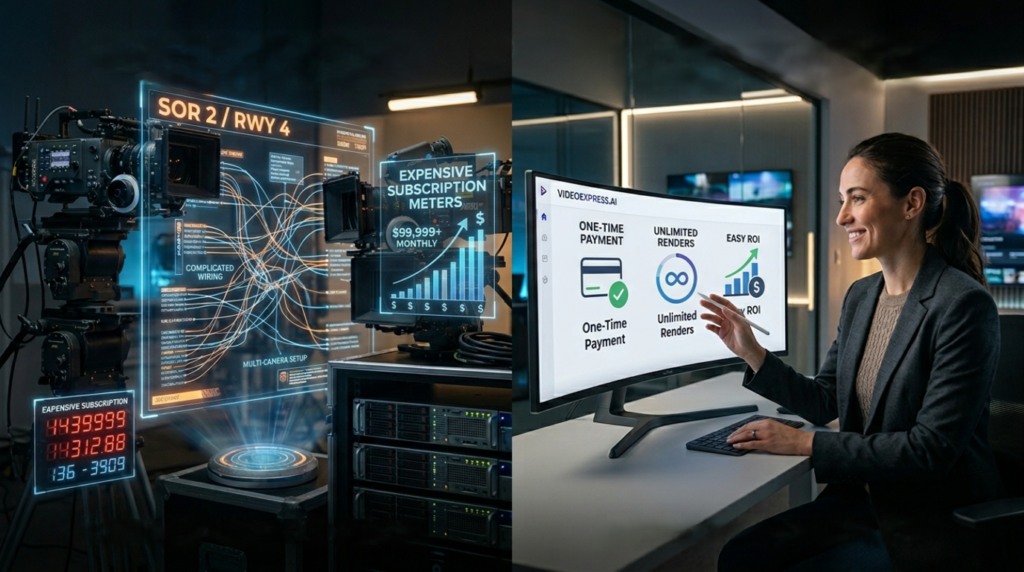
Video is no longer something we experiment with. It is something we rely on every day. As marketers, creators, and business owners, we have seen how fast content consumption has changed. People scroll quickly, attention spans are shorter, and static content is no longer enough. This is where an ai video generator has completely changed how we create and deliver content.
When I first started exploring these tools, I expected them to save time. What I did not expect was how they would change the entire production mindset. Instead of spending days planning a single video, we can now create multiple versions, test them, and improve results in real time. This shift is why both beginners and professionals are moving toward AI powered video creation.
If you are trying to choose the best ai video software, you need to think beyond features. You need to think about how the tool fits into your workflow, how fast you can create content, and how much it costs you over time.
What Actually Matters When You Choose an AI Video Generator
From my experience testing multiple ai video tools, the biggest difference does not come from design or interface. It comes from how the tool performs under real pressure when you need consistent output.
The first thing we always look at is AI prompt understanding, which determines how accurately a tool follows instructions and generates consistent visuals. When you give instructions, the tool should follow them accurately. In our testing, OpenAI Sora 2 handled complex instructions very well, especially when scenes required continuity. However, we often had to refine prompts more than once to get perfect results.
The second factor is consistency. If you are creating product videos or brand content, you need visuals that stay uniform across scenes. Runway Gen 4 helped us maintain better visual consistency when we reused references, but it still required manual adjustments at times.
The third factor is speed. As someone who has worked on marketing campaigns, I can tell you that speed directly affects performance. If you can generate five videos in the time it takes to create one, you can test more ideas and get better results.
The fourth factor is cost. Many ai tools for marketers use credit systems. At first, this seems manageable. But once you start testing multiple variations, the cost increases quickly. We have seen campaigns where testing alone consumed the entire monthly budget.
How the Top AI Video Tools Compare in Real Workflows
When we compare tools, we do not just look at features. We look at how they perform when used daily.
Sora 2 is built for realism. It produces high quality visuals that feel cinematic. When we used it for storytelling videos, the results were impressive. However, each video often required multiple attempts, which increased both time and cost.
Gen 4 offers more flexibility. It allows you to refine visuals and control the output. We found it useful when we needed to maintain brand identity, but it still required effort to get everything aligned.
Videoexpress.ai focuses on speed and simplicity. When we tested it for short form content, it consistently produced usable videos within minutes. It does not aim for cinematic perfection, but it delivers results quickly, which is critical for platforms like Instagram and YouTube.
The biggest difference comes down to how these tools fit into your workflow. If you need high end visuals, you may spend more time refining outputs. If you need daily content, speed becomes more important than perfection.
Why Online Video Creators Are Changing Marketing

An online video creator has removed many of the traditional barriers we used to face. You no longer need heavy software, expensive hardware, or advanced editing skills.
From what we have seen, the biggest advantage is flexibility. You can create videos from anywhere, collaborate with your team, and publish content faster than ever. This is why businesses are now using video marketing tools as a core part of their strategy rather than an optional add on.
When you combine an ai video generator with a strong content strategy, you can produce content consistently without depending on large teams or external agencies.
Real Case Study
How We Reduced Video Costs by Seventy Percent
To understand the real impact, let me share a practical scenario based on a workflow we tested with a small ecommerce brand.
Before using AI, their process was slow and expensive. Each video cost around four hundred dollars and took several days to produce. Because of this, they were only able to create a limited number of videos each month.
After switching to AI tools, everything changed.
We used Sora 2 for high quality brand videos. We used Gen 4 to refine visuals and maintain consistency. For daily content and ads, we used Videoexpress.ai.
Within two months, their production cost dropped by nearly seventy percent. The time required to create a video was reduced from days to minutes. More importantly, they were able to create multiple variations of the same content and test what worked best.
This led to a significant increase in engagement and conversions. The brand was no longer guessing what would work. They were testing and optimizing continuously.
How Businesses Are Using AI Video Tools Today
Across industries, we are seeing similar patterns.
In ecommerce, businesses use ai video tools to create product videos that improve buyer confidence. Instead of relying on one perfect video, they create multiple variations and test different messaging.
In education, creators use these tools to simplify complex topics and make learning more engaging.
In software companies, onboarding videos are now created using AI to help users understand products faster.
For marketers, these tools have become essential. They allow us to create ads at scale, test different creatives, and improve campaign performance without increasing costs.
Choosing the Best AI Video Software for Your Needs
If you are trying to decide which tool to use, you need to be clear about your goal.
If your focus is storytelling and visual quality, Sora 2 is a strong choice.
If you want more control over design and output, Gen 4 works well.
If your priority is speed, volume, and cost efficiency, Videoexpress.ai offers a practical solution.
From our experience, the most effective approach is not choosing one tool. It is combining tools based on what they do best.
Final Thoughts

The rise of the ai video generator has changed how we think about content creation. We are no longer limited by time, cost, or technical skills. We can create, test, and improve content faster than ever.
As we move forward, the advantage will not come from using AI alone. It will come from how well you use it. Businesses that adapt quickly and build efficient workflows will stay ahead, while others will struggle to keep up.
If you are serious about growing your content and improving your results, now is the time to explore these tools and build a system that works for you.