⚠️ Affiliate Disclosure: We earn a commission on purchases made via our links — at no extra cost to you.

Hostinger vs Bluehost 2026: Which Web Hosting Provider Is Better for Your Website?
Contents
hide

Choosing a web hosting provider is one of the most important decisions when launching a website. The hosting company you select affects your website’s speed, security, reliability, and overall user experience. Two of the most popular hosting providers in 2026 are Hostinger and Bluehost. Both companies offer shared hosting, WordPress hosting, free domains, SSL certificates, and beginner friendly tools, but they take different approaches when it comes to performance, pricing, and website management.
In this comparison, we evaluate Hostinger and Bluehost based on features, speed, uptime, security, ease of use, customer support, and long term value. The goal is to help website owners, bloggers, small businesses, and beginners choose the hosting platform that best matches their needs.
Why You Can Trust This Comparison
This review is based on publicly available hosting features, documented plan specifications, industry performance benchmarks, and hands on experience managing WordPress websites on shared hosting platforms. Rather than focusing on marketing claims, this comparison examines the practical factors that most website owners care about, including website speed, renewal pricing, security tools, storage resources, and customer support availability.
Since hosting needs vary from one user to another, there is no single provider that is perfect for everyone. Instead, this guide highlights the strengths and limitations of each platform so readers can make an informed decision based on their own goals and budget.
Hostinger vs Bluehost Quick Comparison
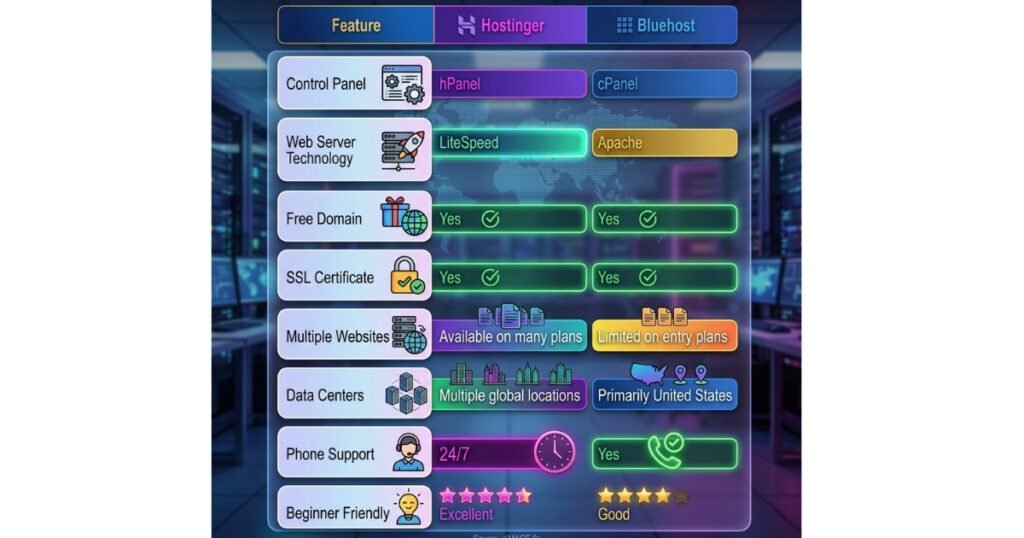
Features and Hosting Resources
Both Hostinger and Bluehost provide the essential tools needed to launch a website. These include one click WordPress installation, free SSL certificates, website management tools, and customer support resources. However, there are differences in how each company structures its plans.
Hostinger generally provides more storage and allows users to host multiple websites on many of its plans. It also includes email hosting and automated backups on selected plans, making it attractive for users who want additional value without purchasing several add ons. Bluehost focuses on simplicity and traditional hosting tools, making it familiar to users who have worked with cPanel based hosting environments before.
For beginners building their first website, both platforms provide enough resources to get started, but Hostinger tends to offer more flexibility for users planning to manage multiple websites under a single account.
Speed and Performance
Website speed affects both user experience and search engine rankings. Visitors expect websites to load quickly, and slow performance can increase bounce rates and reduce conversions.
Hostinger uses LiteSpeed web server technology, which is widely known for efficient resource management and strong WordPress performance. Combined with built in caching tools, this setup often helps websites load faster, especially during periods of moderate traffic.
Bluehost relies primarily on Apache based infrastructure, a long established and reliable technology used by many hosting companies. While Apache remains dependable, it may not always deliver the same level of performance optimization found in LiteSpeed powered environments.
For website owners who prioritize speed and Core Web Vitals performance, Hostinger generally offers an advantage. However, Bluehost still provides acceptable performance for small business websites, blogs, and personal projects.
Uptime and Reliability
Reliable hosting ensures that visitors can access your website whenever they need it. Even short periods of downtime can affect customer trust, search visibility, and online revenue.
Both Hostinger and Bluehost advertise strong uptime commitments and maintain modern infrastructure designed to keep websites available. In real world usage, both providers generally perform well for shared hosting services.
Hostinger benefits from a distributed infrastructure with multiple data center locations, helping improve reliability and performance for international audiences. Bluehost also maintains dependable hosting services, particularly for customers targeting visitors within North America.
For most website owners, either provider offers sufficient reliability, although Hostinger’s global infrastructure may provide additional flexibility for international projects.
Security Features
Website security is essential regardless of website size. Cyber threats such as malware infections, brute force attacks, and unauthorized access attempts can affect any website.
Hostinger includes several security features designed to protect websites, including SSL certificates, account protection tools, server level monitoring, and malware prevention systems. Many of these features are available without requiring additional purchases.
Bluehost also provides SSL certificates, security monitoring, and account protection measures. Users can further enhance security through additional services and WordPress security plugins.
Both providers offer a solid security foundation for most websites. The difference is that Hostinger often includes more security related features within its standard hosting packages, while Bluehost may require additional services for advanced protection.
Ease of Use and Control Panel Experience
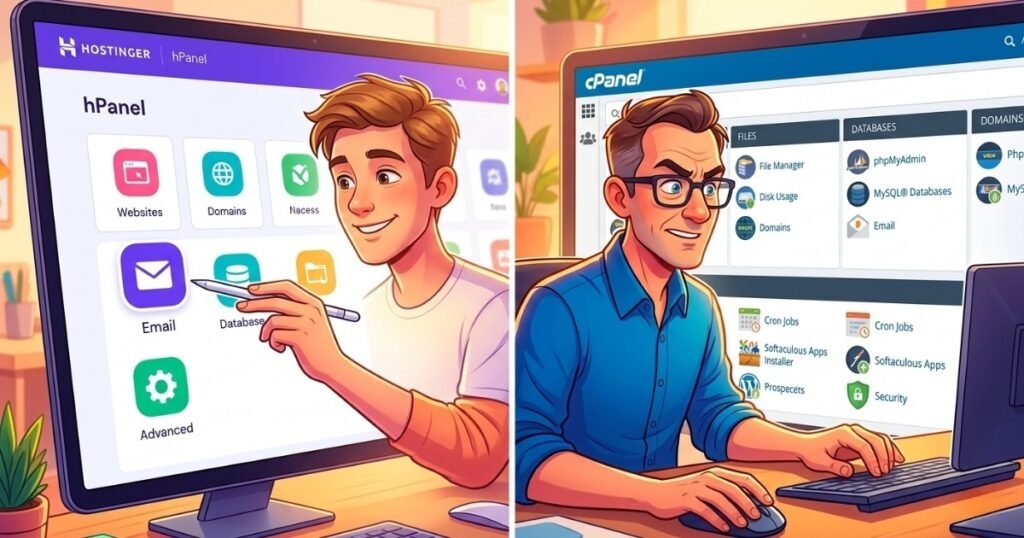
A hosting dashboard is where users manage domains, databases, email accounts, backups, and website settings. Ease of use can significantly impact the overall hosting experience.
Hostinger uses its custom hPanel interface. The dashboard is clean, modern, and designed with beginners in mind. Most common tasks are organized clearly, helping users navigate hosting management without technical confusion.
Bluehost uses cPanel, one of the most widely recognized hosting control panels in the industry. Many developers and experienced website owners already understand how cPanel works, which can reduce the learning curve for existing users.
If you are completely new to web hosting, Hostinger’s hPanel may feel easier to learn. If you have previous hosting experience, Bluehost’s cPanel environment may feel more familiar.
Customer Support
Customer support becomes especially important when technical issues occur. Quick access to knowledgeable support staff can save valuable time and prevent website downtime.
Bluehost offers live chat, ticket support, and telephone support. The availability of phone support is one of Bluehost’s strongest advantages, particularly for users who prefer speaking directly with a support representative.
Hostinger primarily focuses on live chat based assistance supported by a large knowledge base and educational resources. Many users appreciate the speed and convenience of chat support, although some still prefer having a phone option available.
The better choice depends on your preferred communication style. Users who value telephone support may prefer Bluehost, while those comfortable with live chat will likely find Hostinger sufficient.
Pricing and Long Term Value
Pricing is often one of the biggest factors when choosing a hosting provider. While introductory promotions can appear attractive, renewal costs should also be considered before making a decision.
Hostinger is generally known for competitive introductory pricing and reasonable long term value. Its plans often include more resources, which can reduce the need for immediate upgrades as websites grow.
Bluehost also offers promotional pricing for new customers, but renewal costs may be higher depending on the selected plan. For some users, the additional cost may be justified by the availability of phone support and familiarity with traditional hosting tools.
Website owners should evaluate both the initial price and future renewal costs before committing to a hosting plan.
Who Should Choose Hostinger?
Hostinger is a strong choice for users who prioritize affordability, speed, and flexibility. It works particularly well for bloggers, freelancers, small businesses, affiliate marketers, and users managing multiple websites. The combination of LiteSpeed technology, modern dashboard design, global data centers, and competitive pricing makes it one of the most attractive hosting options for beginners and growing websites.
Who Should Choose Bluehost?
Bluehost is best suited for users who prefer a traditional hosting environment and want access to phone based customer support. It is also a practical option for website owners who are already familiar with cPanel or who want a hosting provider with a long history in the WordPress ecosystem. Small businesses targeting primarily North American audiences may find Bluehost a comfortable and reliable choice.
Final Verdict
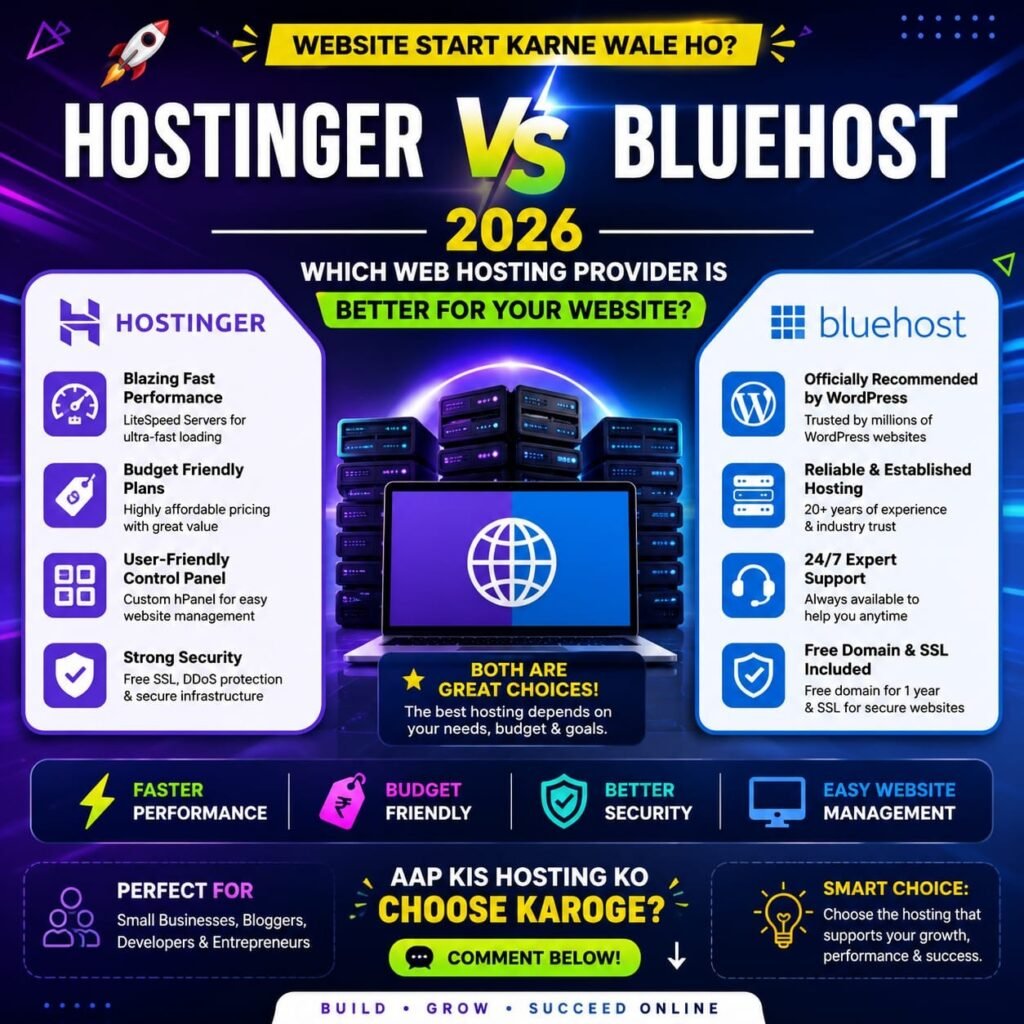
After comparing features, performance, ease of use, security, customer support, and pricing, Hostinger provides stronger overall value for most website owners in 2026. Its combination of fast hosting technology, user friendly dashboard, global infrastructure, and competitive pricing makes it particularly appealing for beginners and growing online businesses.
Bluehost remains a reliable hosting provider with solid support options and a familiar management environment. However, users focused on performance, flexibility, and long term affordability will likely find Hostinger to be the more attractive option.
Ultimately, both hosting providers are capable of running successful websites. The right choice depends on your budget, technical preferences, and long term website goals.

Hi, I am Priyanka Roy, an SEO Specialist and Content Writer at Sandhu Marketing Agency Inc.. For the past 4 years, I have been helping businesses improve their websites and grow their organic traffic through practical and effective SEO strategies.
I enjoy working on different SEO tools and exploring how they actually perform in real situations. Over time, I have tested many tools, faced real challenges, and learned what works and what does not. This is exactly what I share on Savenjoy. My goal is to help you understand what to expect from a tool before you spend your money on it.
Instead of just listing features, I focus on real experiences, honest insights, and simple explanations so you can make better decisions with confidence. All I want is to make your journey easier and smarter.
I love trying new digital tools even when I do not need them, just to see if they are worth it or not.