⚠️ Affiliate Disclosure: We earn a commission on purchases made via our links — at no extra cost to you.

How to Become a Video Editor
Contents
hide
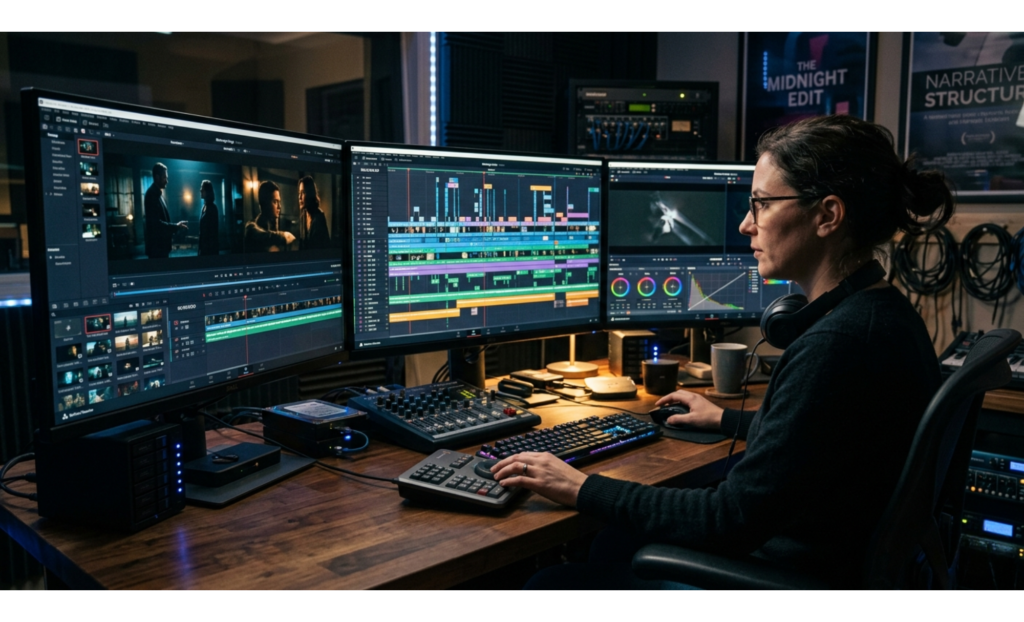
Storytelling is a powerful way to communicate messages, convey emotion, and inspire others. From the first cave dwellers painting animal figures to the immersive streaming hits of 2026, stories are how we connect. As a video editor, you are the architect of these stories, merging technological knowledge with creative freedom to find the heart of a narrative.
With the U.S. Bureau of Labor Statistics predicting a 9% increase in employment for film and video editors through 2032, there has never been a better time to turn your passion into a career.
What Does a Video Editor Do?
A video editor is a professional who combines graphics, video, and sound into a cohesive multimedia piece. Unlike amateur editing, professional editing involves handling hundreds of hours of raw uncut rushes. You are responsible for:
- Narrative Flow: Experimenting with scene orders to determine the most compelling cut.
- Technical Polishing: Splicing footage, color grading, and adding special effects.
- Collaboration: Working with directors, producers, and sound engineers to achieve a unified vision.
What Skills Do You Need?
Beyond knowing which buttons to click, successful editors in 2026 possess a specific blend of traits:
- Storytelling and Empathy: Understanding the science of human emotion to keep an audience engaged.
- Attention to Detail: Scrutinizing every frame for continuity errors or audio-sync glitches.
- Visual Acuity: A natural eye for color theory and composition.
- Problem Solving: Treating a timeline like a puzzle, often cutting scenes down without sacrificing the plot.
- Communication: Clearly relaying progress to stakeholders and using tools for frame-accurate feedback.
- Adaptability: Staying flexible when a director requests a last-minute change or production is delayed.
10 Ways to Become a Better Video Editor in 2026
To stay competitive in a landscape increasingly influenced by AI and high-speed content delivery, follow these ten strategies:
- Master Non-Linear Storytelling: Understand how to engage viewers in vertical formats for social commerce.
- Optimize AI Workflows: Use AI for rotoscoping and transcription to increase your turnaround speed.
- Refine Sound Design: Layer ambient noise and foley to create an immersive auditory experience.
- Study Color Theory: Move beyond basic correction to use color grading as a narrative tool.
- Focus on the Hook: In digital marketing, the first three seconds of your edit are the most critical.
- Learn Basic Motion Graphics: The ability to create clean, animated typography is often a baseline requirement.
- Prioritize Organization: Develop strict file-naming conventions to facilitate easier collaboration.
- Understand Compression: Master the technical export settings for various platforms like Cinema, Web, and Mobile.
- Practice Emotional Pacing: Learn when to let a shot breathe versus when to use rapid-fire cuts.
- Build a Professional Network: Join editor-centric communities to stay updated on industry shifts.
Roadmap to Become a Video Editor
The journey to a professional role usually involves working your way up with hands-on experience and professional connections.
Phase 1: Education and Certification
There is no single right way to learn. Some prefer a Bachelor’s Degree in Film and Video Production for its deep dive into cinema history and theory. Others opt for Technical Schools or Certification Programs. Becoming an Adobe Certified Professional in Premiere Pro or After Effects is a reliable way to validate your expertise.
Phase 2: Practice with Purpose
You don’t need an expensive camera to start. Use high-quality smartphone footage or royalty-free clips from sites like Pexels to build your projects. Focus on mastering the interface of your chosen video creation software and learning how to filter through massive amounts of footage. Developing these organizational and technical skills is what truly separates a professional from a hobbyist.
Phase 3: Build a Living Portfolio
Your showreel is your calling card. It should be a 60 to 90 second best that demonstrates versatility across genres like YouTube vlogs, corporate testimonials, short films, and social media ads.
Phase 4: Gain Real-World Experience
Look for entry-level roles such as an Assistant Editor or an Intern. Learning on the job allows you to see the business side of filmmaking, including managing client expectations and high-pressure deadlines.
Conclusion
One of the greatest appeals of this career is that your final product speaks louder than your resume. Whether you are self-taught or university-educated, your ability to capture an audience’s attention is your ultimate credential. In this golden age of visual media, the world is waiting for your edit.
Also Read: The Best Video Editing Software for Your PC

Hi, I am Priyanka Roy, an SEO Specialist and Content Writer at Sandhu Marketing Agency Inc.. For the past 4 years, I have been helping businesses improve their websites and grow their organic traffic through practical and effective SEO strategies.
I enjoy working on different SEO tools and exploring how they actually perform in real situations. Over time, I have tested many tools, faced real challenges, and learned what works and what does not. This is exactly what I share on Savenjoy. My goal is to help you understand what to expect from a tool before you spend your money on it.
Instead of just listing features, I focus on real experiences, honest insights, and simple explanations so you can make better decisions with confidence. All I want is to make your journey easier and smarter.
I love trying new digital tools even when I do not need them, just to see if they are worth it or not.