⚠️ Affiliate Disclosure: We earn a commission on purchases made via our links — at no extra cost to you.
The 2026 Adobe Affiliate Program : How to Scale 85% Commissions Like a Pro
Contents
hide

If you’re reading this, you’re likely standing where I was years ago: looking at a massive brand like Adobe and wondering if there’s actually any money left in it for you. After selling thousands of software licenses across various SaaS niches from Hostinger server plans to Chatterpal AI avatars, I can tell you one thing with absolute certainty: Adobe is the ultimate high-ticket bread and butter for your affiliate portfolio.
In the SaaS world, we usually fight for 20% recurring commissions. But Adobe is a different beast. They offer a staggering 85% commission on the first month of a subscription. In this masterclass, I’m stripping away the fluff. I’m going to show you exactly how to position Adobe software, Adobe Creative Cloud, and high-intent tools like an Adobe PDF editor online to turn your traffic into a high-converting machine.
The Reality of the Adobe Ecosystem in 2026
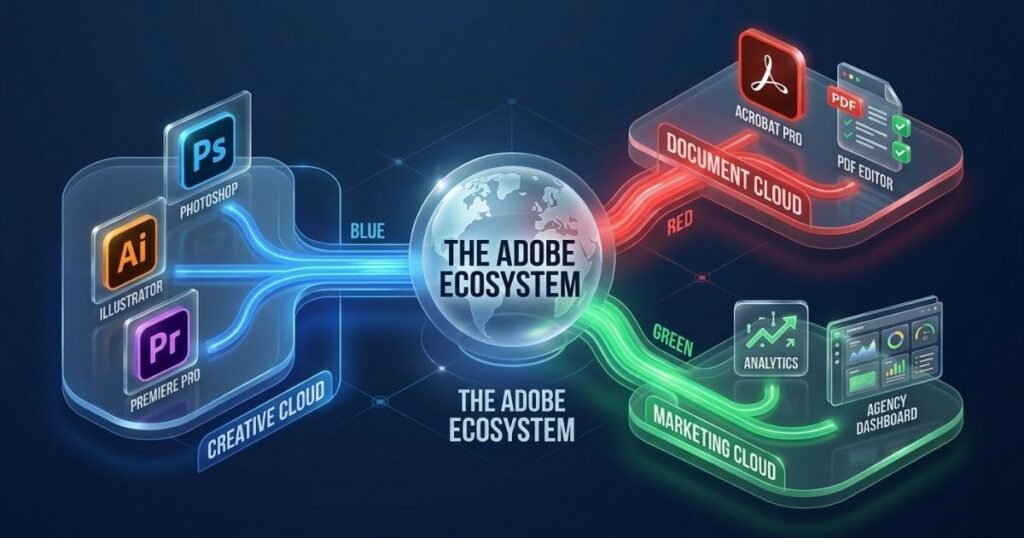
Most beginners make the mistake of thinking Adobe is just Photoshop. As an experienced marketer, you know that Adobe is actually three distinct revenue streams masquerading as one brand. To hit that $5k–$10k monthly mark, you need to understand the Pillars of Profit:
- Pillar A: The Creative Cloud: This is where the 500,000+ monthly searches for Adobe Creative Cloud and Adobe Illustrator live. This is your top of funnel traffic. Whether it’s a student needing a discount or a pro-photographer upgrading their suite. This is the easiest way you will ever get from an audience.
- Pillar B: The Document Cloud: Don’t sleep on the Adobe PDF editor online market. While design is sexy, document management is essential. Small business owners, lawyers, and students search for PDF solutions every second. This is a high-intent solution sell.
- Pillar C: The Marketing Cloud: If your website caters to enterprises or high-level agencies, the Adobe Marketing Cloud is your big ticket. The sales cycle is longer, but the Average Order Value (AOV) is massive. We’re talking about enterprise-level digital transformation.
Mastering the Payout Mechanics: Beyond the Surface Level

Understanding the commission structure is the first step in moving from a casual promoter to a high-volume affiliate. While many programs offer a flat percentage, Adobe’s 85% first-month commission is a strategic play designed to reward those who can drive high-intent, new users. When you promote a monthly subscription, you are essentially capturing nearly the entire initial payment. This is why experienced marketers focus heavily on trial-to-paid conversions. If you can convince a user to start a trial through your link, and they roll into a monthly plan, that single lead becomes a high-margin win for your business.
However, the strategy shifts when you deal with enterprise-level clients or serious professionals who prefer the yearly prepaid model. In this scenario, you earn an 8.33% cut of the entire year upfront. While 8.33% sounds lower than 85%, the actual dollar amount is often much larger because you are getting a piece of a $600+ transaction all at once. As a pro, you should categorize your content: use monthly/trial hooks for students and hobbyists to get high-frequency 85% payouts, and use full suite/business hooks for professional studios to land those large yearly lump-sum commissions.
Cross-Selling with Hostinger and Chatterpal
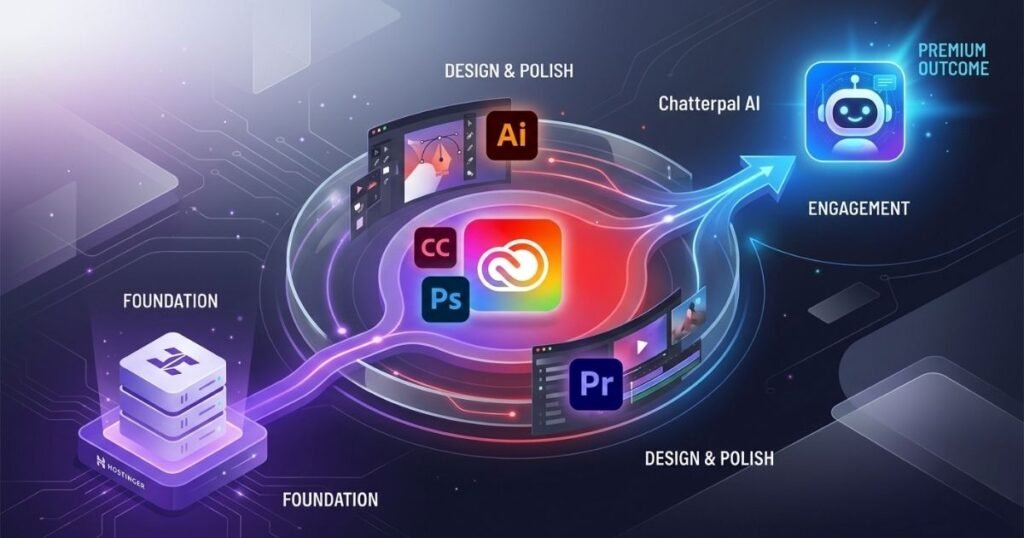
The secret to selling thousands of units isn’t just ranking for Adobe review; it’s about embedding the software into a larger business solution. Since your portfolio already includes heavy hitters like Hostinger and Chatterpal, you have the perfect tech stack to offer a complete business-in-a-box. Think about the journey of a new entrepreneur. They come to your site to buy hosting from Hostinger. Once that site is live, it’s a blank canvas. They need a professional logo, which leads them directly to Adobe Illustrator. They need high-end web graphics, which leads them to Photoshop. By creating a Step-by-Step Launch Guide, you can secure multiple commissions from a single reader who started out just looking for a server.
The synergy with Chatterpal is even more potent. If you are promoting Chatterpal’s AI avatars, your audience is interested in video marketing. However, AI-generated content often needs a human touch to look truly premium. This is where you bridge the gap. You can teach your audience how to take their Chatterpal avatars and drop them into Adobe Premiere to add professional B-roll, or how to use Adobe Stock to find high-quality backgrounds that make their AI videos stand out from the competition. You aren’t just selling another tool; you are selling the professional edge that makes their AI investment actually work.
The Psychology of the 30-Day Cookie
In the world of high-ticket SaaS marketing, the cookie window is your most vital deadline. Beginners often post a link and hope for the best, but a professional knows that 30 days is a race against the clock. Most users don’t buy Adobe software tools on the first click; they research, they compare, and they wait for a paycheck. This is where your strategy must shift from promotion to retention.
By capturing an email address or encouraging a bookmark, you ensure that when the user is ready to buy on day 15 or day 25, they come back through your portal. I’ve found that the highest conversion rates come from Tutorial Stacking. For instance, if you show someone a specific workflow in Adobe Illustrator, follow up with a reminder that their 7-day trial is about to expire. You must act as their guide during that 30-day window, nudging them from a curious lead into a paid subscriber before the cookie expires and your commission disappears into the void of direct traffic.
The Deep Link Secret: Targeting Specific Pains
One of the biggest mistakes I see is affiliates sending all their traffic to the Adobe homepage. That is a conversion killer. As a seasoned marketer, you should be using deep linking through the Partnerize dashboard. If your blog post is about creating social media graphics, your link should go directly to the Adobe Express landing page. If you are solving a document security issue, link directly to the Adobe Acrobat Pro pricing.
The goal is to reduce friction. Every extra click a user has to make is an opportunity for them to leave. By deep-linking to the specific Adobe software that solves the problem you’ve just described, you create a seamless Aha! moment. This is how you move thousands of units by being the bridge between a specific frustration and the exact tool that fixes it, rather than just pointing toward a massive corporate storefront.
To build real authority, you must address the elephant in the room, the competition. Users come to your site because they are undecided. They are asking, “Should I just use Canva?” or “Is Affinity Photo enough?” Your job is to provide an honest, pro-level comparison.
- Adobe vs. Canva: Position Canva as the entry-level tool for non-designers, but frame Adobe Creative Cloud as the career-level tool. Explain that while Canva is great for a quick Instagram post, it doesn’t give you the vector precision of Adobe Illustrator required for large-scale branding.
- The Subscription Debate: Many users hate subscriptions. Acknowledge this. But then, pivot to the value of the Adobe ecosystem, the cloud storage, the 20,000+ fonts, and the constant AI updates like Firefly. You aren’t selling a rental; you are selling an all-access pass to the industry standard.
The 2026 AI Revolution: Adobe Firefly
You cannot write about Adobe today without mentioning AI. Adobe Firefly has changed the game. Previously, you could only sell Adobe to artists. Now, you can sell it to anyone with a keyboard. Your messaging should focus on the AI advantage. Tell your beginners that they no longer need years of training to remove backgrounds or extend images; they just need an Adobe subscription and a few text prompts. This pivot allows you to target a much broader demographic: bloggers, small business owners, and social media managers who were previously intimidated by the software’s complexity.
Technical Setup: Partnerize & Payments
Joining the program is handled through Partnerize. When you apply, don’t just say you have a blog. Tell them about your Vertical are you focusing on Education, Small Business, or Creative Professionals? Once approved, your first task is setting up your payment info. Adobe pays out through various methods including PayPal and Direct Deposit, but remember the $30/£20 threshold. If you’re moving volume, this threshold is hit in a single sale.
Conclusion:
The Adobe affiliate program isn’t a get rich quick scheme; it’s a get rich through authority scheme. By focusing on high-value keywords like Adobe Illustrator and solving real problems with an Adobe PDF editor online, you build a brand that people trust. Integrate these tools with your Hostinger and Chatterpal promotions to create a holistic business guide that earns you multiple streams of income from the same visitor.

Hi, I am Priyanka Roy, an SEO Specialist and Content Writer at Sandhu Marketing Agency Inc.. For the past 4 years, I have been helping businesses improve their websites and grow their organic traffic through practical and effective SEO strategies.
I enjoy working on different SEO tools and exploring how they actually perform in real situations. Over time, I have tested many tools, faced real challenges, and learned what works and what does not. This is exactly what I share on Savenjoy. My goal is to help you understand what to expect from a tool before you spend your money on it.
Instead of just listing features, I focus on real experiences, honest insights, and simple explanations so you can make better decisions with confidence. All I want is to make your journey easier and smarter.
I love trying new digital tools even when I do not need them, just to see if they are worth it or not.