⚠️ Affiliate Disclosure: We earn a commission on purchases made via our links — at no extra cost to you.

Why You Need a Password Manager in 2026
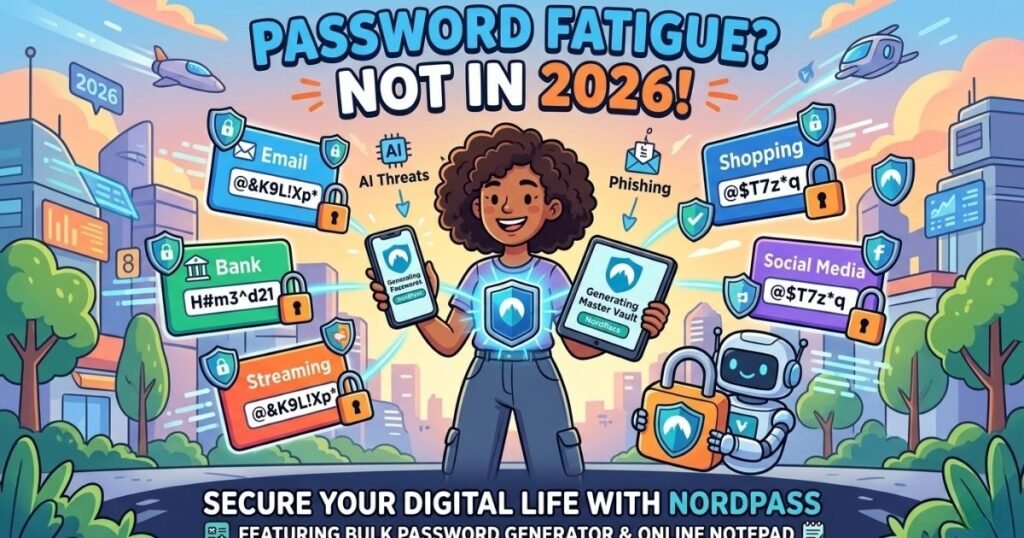
Let’s be honest. Most people cannot remember all their passwords anymore. Between banking apps, shopping websites, streaming platforms, work accounts, and social media, the average person now manages dozens of logins every day. That sounds manageable until one website asks for a password with capital letters, numbers, symbols, and no repeated characters, while another suddenly demands a password update for the third time this year.
This constant pressure has created something experts now call password fatigue. It is the mental exhaustion people feel from trying to manage too many passwords at once. In 2026, this problem has become bigger than ever because cyber threats are no longer simple scam emails from strangers. Criminals now use artificial intelligence to crack weak passwords, imitate trusted companies, and steal personal information at incredible speed. That is exactly why password managers are becoming one of the smartest digital tools people can use today.
Why People Keep Reusing Passwords
The human brain is not built to remember hundreds of random combinations. Most people eventually fall into survival mode. They reuse the same password everywhere or create tiny variations of it. Maybe your banking password becomes your shopping password with an extra number added at the end. It feels convenient and harmless until one account gets hacked.
The problem is that hackers know people do this. Once they steal one password from a leaked website, they automatically test it across email accounts, payment apps, and social media profiles. This is called credential stuffing, and it works surprisingly well because exhausted users often recycle passwords without realizing the risk.
At some point, many people simply give up trying to follow perfect security habits. They store passwords in browser notes, write them in notebooks, or repeatedly click “Forgot Password” whenever they get locked out. It is not laziness. It is digital burnout.
Cyber Threats Are Smarter in 2026
Cybercrime in 2026 looks very different from the old internet scams people used to laugh at. Fake emails are now incredibly convincing. Some phishing messages look exactly like real banking alerts or work emails. AI tools help criminals write professional sounding messages with almost no spelling mistakes or obvious warning signs.
Imagine receiving an email saying your bank account has suspicious activity. The logo looks real. The message sounds urgent. The website link appears normal. Many people panic and click without thinking twice. That single moment can expose passwords, financial details, and even personal documents.
Attackers also use automated software to test millions of stolen passwords within minutes. If you still use the same password for multiple accounts, one data leak can quickly turn into a full digital disaster. This is why old habits no longer work in today’s online world.
Why Password Managers Are Becoming Essential
A password manager works like a secure digital vault. Instead of remembering dozens of complicated passwords, you only need to remember one strong master password. The software stores the rest safely and can even generate extremely strong passwords automatically.
One popular option is NordPass, which has become well known for combining strong security with a simple user experience. It uses advanced XChaCha20 encryption, which protects stored information by turning it into unreadable code that hackers cannot easily access.
NordPass also includes features like a Data Breach Scanner that alerts users if their credentials appear in leaked databases online. That means you can change compromised passwords before attackers gain access to important accounts.
Another huge advantage is cross device synchronization. Whether you switch between a laptop, phone, or tablet, your passwords stay available securely without forcing you to memorize everything yourself.
Even Cybersecurity Experts Use Them
One thing surprises many people. Cybersecurity professionals use password managers too. Even experts cannot realistically remember hundreds of strong and unique passwords without help.
Most trusted password managers also use something called Zero Knowledge architecture. In simple terms, this means even the password manager company cannot see your stored passwords. Your information stays encrypted on your own device, which adds an important layer of privacy and trust.
Of course, no security tool is magical. Experts still recommend using multi factor authentication, updating devices regularly, and staying careful online. But password managers remove one of the biggest weaknesses in digital security, which is human memory.
The Future Is Moving Toward Passkeys
The internet is slowly moving toward passwordless logins using passkeys, fingerprints, and facial recognition. This future sounds exciting because people may eventually stop typing passwords altogether.
But we are not fully there yet. Millions of websites still rely on traditional passwords, and many users are unfamiliar with passkeys. Password managers help bridge that gap by supporting both old and modern login systems in one place.
For non technical users, this makes the transition far less stressful. Instead of learning complicated security systems overnight, people can slowly adopt safer login methods while still keeping older accounts organized and protected.
Simple Steps to Get Started
Switching to a password manager is easier than most people think.
• Choose a trusted password manager with strong security features.
• Create one strong master password that is memorable but difficult to guess.
• Import saved passwords from your browser.
• Replace weak or repeated passwords first, especially for banking and email accounts.
• Enable multi factor authentication for extra protection.
• Use the password generator for all future accounts.
The first few days may feel unusual, but most users quickly realize life becomes much easier afterward. Fewer password resets, less stress, and stronger security make a noticeable difference almost immediately.
Conclusion
Password fatigue is not a personal failure. It is the result of trying to manage too many accounts in a fast moving digital world filled with smarter cyber threats.
Password managers like NordPass make online security simpler by storing strong passwords, syncing them across devices, and helping users stay protected without constant frustration.
Better password habits today can save time, reduce stress, and protect your privacy for years to come. In 2026, taking control of your digital security is no longer optional. It is simply part of staying safe online.
Hi, I am Priyanka Roy, an SEO Specialist and Content Writer at Sandhu Marketing Agency Inc.. For the past 4 years, I have been helping businesses improve their websites and grow their organic traffic through practical and effective SEO strategies.
I enjoy working on different SEO tools and exploring how they actually perform in real situations. Over time, I have tested many tools, faced real challenges, and learned what works and what does not. This is exactly what I share on Savenjoy. My goal is to help you understand what to expect from a tool before you spend your money on it.
Instead of just listing features, I focus on real experiences, honest insights, and simple explanations so you can make better decisions with confidence. All I want is to make your journey easier and smarter.
I love trying new digital tools even when I do not need them, just to see if they are worth it or not.