⚠️ Affiliate Disclosure: We earn a commission on purchases made via our links — at no extra cost to you.

Shared vs VPS vs Cloud Hosting: How to choose the best hosting Step by step guide

Selecting the ideal web hosting environment represents one of the most critical foundational decisions an enterprise or a digital creator must make in their operational lifecycle. The infrastructure choice directly dictates the speed, reliability and security parameters of your digital presence which collectively influence search engine optimization rankings and overall user conversion metrics. When a business selects a misaligned platform it creates immediate bottlenecks that ripple across engineering and marketing departments alike. Poorly allocated system assets lead to sluggish page delivery times which trigger higher bounce rates and severely damage brand equity in highly competitive online marketplaces. Making a data driven selection from the outset protects you from the hidden operational costs associated with emergency infrastructure remediation.
Long term digital growth requires a hosting baseline that can fluidly adapt to changing user behavior and traffic volumes without requiring frequent emergency migrations. Many organization leaders mistakenly treat web hosting as a static utility expense rather than a dynamic architectural asset that directly powers their core software stack. Opting for a low tier environment solely based on immediate financial constraints frequently results in severe resource constraints during critical marketing campaigns or product launches. This mismatch often manifests as systemic server errors or total system failures during periods of elevated user engagement. To prevent these catastrophic operational disruptions engineers and business stakeholders must collaborate to thoroughly evaluate backend requirements before committing to a specific infrastructure plan.
Server resource allocation patterns
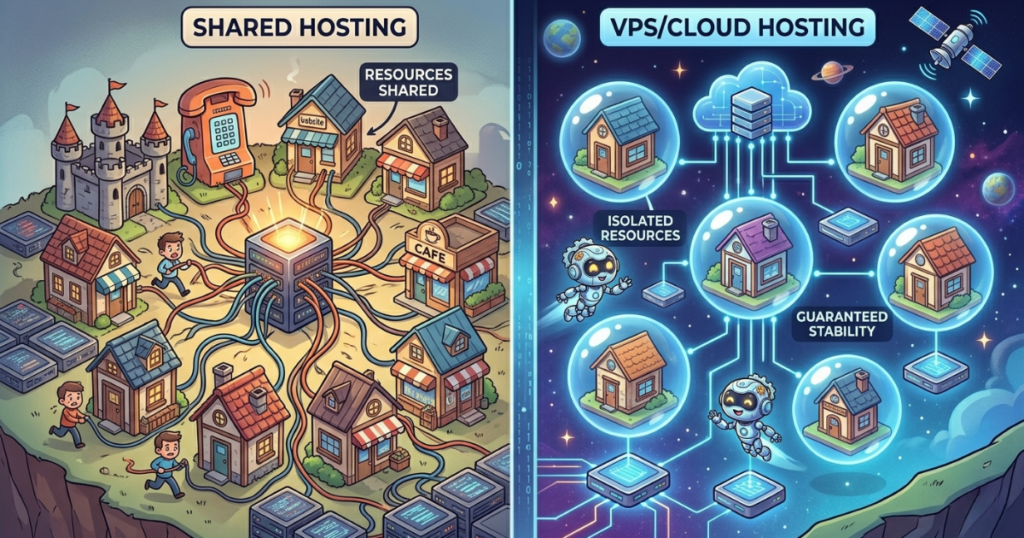
The fundamental difference among web hosting frameworks lies in how physical hardware assets are distributed across separate website tenants. In a traditional shared environment a single bare metal server hosts hundreds or even thousands of independent websites which forces them to constantly compete for a finite pool of central processing unit cycles and volatile memory. This setup introduces the risky noisy neighbor effect where a massive traffic spike on one website directly depletes the server resources available to everyone else on that machine. In sharp contrast a virtual private server leverages sophisticated virtualization technology to segment a physical machine into distinct completely isolated digital compartments. This technical separation guarantees that your specific website performance remains entirely stable because your allotted memory and computing cores are securely locked away for your exclusive use. Taking this architectural evolution even further cloud infrastructure networks a vast cluster of physical machines together into a massive virtualized system pool. This distributed design ensures that your application never suffers from a localized hardware crash because multiple secondary nodes are always standing by to instantly absorb the processing workload.
Control levels and root access privileges
Operating system management and configuration privileges vary dramatically depending on the isolation level of your chosen hosting architecture. Standard shared environments completely lock down backend administrative configurations to protect the overarching server stability for all co-hosted user accounts. While this restrictive setup successfully minimizes the technical expertise required to manage a website it simultaneously blocks engineers from deploying customized software packages or optimizing core server caching modules. Moving up to a virtual private server completely removes these administrative boundaries by granting full root access over the virtualized operating system. This high level privilege allows system administrators to install custom dependencies, manage firewalls and fine tune database parameters exactly to their software requirements. Advanced cloud environments match these deeper system privileges while also introducing programmable application programming interfaces and centralized control panels. These sophisticated automation tools give developers the unique power to deploy complex containers, modify software stacks and adjust data storage setups instantly without needing to manually configure low level command line settings.
Bandwidth limits and scalability metrics
Managing sudden website traffic spikes requires a deep technical understanding of how different hosting frameworks enforce data transmission thresholds. Shared hosting environments operate within rigid infrastructure boundaries that easily buckle under intense data requests. If a shared website experiences a sudden viral surge it frequently exceeds its predetermined bandwidth limits which forces the hosting provider to suspend the account to protect the remaining users on that server. Virtual private servers mitigate this risk by providing much larger fixed transmission caps that can comfortably accommodate standard traffic growth. However, because a standard virtual server remains physically bound to one host machine, scaling beyond those limits still requires a structured plan upgrade or a temporary system migration. Cloud hosting completely redefines this dynamic by decoupling digital operations from physical hardware constraints to provide unmatched fluid scalability. The underlying virtual network monitors resource utilization in real time and automatically provisions additional bandwidth and processing power on demand to prevent downtime during massive traffic surges.
Cost efficiency and budget optimization
Every web hosting architecture presents a distinct financial model that must be carefully evaluated against your overarching business growth phase. Shared hosting stands out as an exceptionally budget friendly entry point for early stage blogs portfolio websites and boutique small businesses that require minimal computing power. This low subscription cost allows founders to conserve precious capital and redirect vital financial resources toward content development and audience acquisition. As a digital platform gains consistent traction a virtual private server emerges as the most balanced price to performance investment. It delivers highly predictable monthly operational costs while providing the dedicated hardware assets necessary to run complex database queries efficiently. For rapidly scaling enterprises and modern software applications cloud infrastructure introduces a highly flexible utility billing framework. This usage based model charges organizations exclusively for the precise memory computing cycles and storage assets they consume in real time which successfully eliminates the wasted expense of overprovisioning idle hardware capacity.
Website performance and downtime prevention
Maximizing website performance requires a hosting infrastructure capable of delivering rapid page responses while maintaining an unbroken uptime record. When an application runs inside an isolated virtual private server environment it remains completely insulated from the erratic traffic spikes of neighboring accounts. This strict resource segregation guarantees consistent database read write speeds which translates into faster checkout experiences for e-commerce customers. Cloud hosting achieves the highest standard of infrastructure resilience by eliminating the traditional single point of failure that threatens standalone physical servers. If a physical hardware component fails within a cloud network automated failover protocols instantly migrate your active virtual machine to a completely healthy hardware node. This seamless background transition occurs without any service interruption or human intervention which serves as the ultimate strategy for downtime prevention across mission critical business networks.
Security enhancement and dedicated IP options
Maintaining a strong digital perimeter is highly dependent on the baseline isolation properties of your web hosting environment. Shared hosting introduces unique security risks because hundreds of separate sites share a single underlying file system directory. If a malicious actor exploits a vulnerability on a single poorly maintained blog they can potentially navigate the shared directory to compromise adjacent sites on that server. Upgrading to a virtual private server or a cloud network establishes a highly secure digital barrier that confines your data within an encrypted sandbox environment. Furthermore these advanced hosting architectures include a dedicated IP address as a standard component of their deployment. Having a dedicated IP address completely detaches your domain reputation from bad actors while providing the clean isolated network environment required to manage custom secure sockets layer certificates and ensure optimal email deliverability.
- Standard shared plans introduce structural security vulnerabilities due to shared file directory access points across separate user accounts
- Virtual private servers mitigate external file system intrusion risks by enforcing strict operating system virtualization boundaries
- Cloud frameworks provide enterprise grade protection by layering distributed denial of service mitigation directly into the network fabric
- A dedicated IP address ensures that your secure email communications never get filtered into spam folders due to the illicit actions of adjacent server tenants
Making your Final Hosting Decision with Savenjoy
Assessing your current traffic and technical needs
Selecting the right web hosting plan requires a pragmatic data driven assessment of your current website metrics and near term business growth milestones. Organizations must thoroughly analyze their average monthly visitor volume peak concurrent user spikes and database storage requirements before choosing an infrastructure tier. A basic informational brochure website driving fewer than ten thousand monthly visits can thrive within a standard shared setup while an agency managing multiple client domains will require the dedicated resources of a virtual private server. For complex e-commerce storefronts or dynamic software applications that experience unpredictable traffic spikes cloud infrastructure becomes non-negotiable to preserve website performance. Mapping your exact technical requirements against these operational traits ensures you choose a platform that perfectly supports your current digital presence without overpaying for unneeded server capacity.
Why migrating with Savenjoy ensures long term success
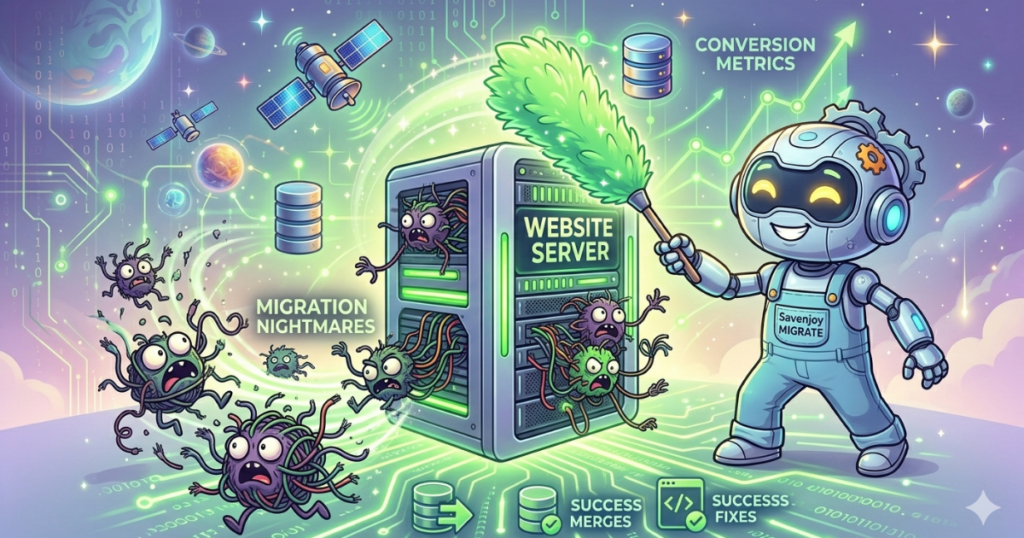
Transitioning your digital infrastructure to an advanced environment can be a technically daunting process that risks unexpected data loss and extensive operational downtime if executed incorrectly. The specialized team at Savenjoy simplifies this entire infrastructure evolution by managing the technical complexities of server migration on behalf of your business. By visiting savenjoy.com organizations gain direct access to managed deployment options that ensure a seamless transition from restrictive shared plans to high performance virtual servers and cloud setups. Savenjoy provides the continuous monitoring expert technical support and optimized hardware configurations required to keep your modern web applications running at peak efficiency. Entrusting your platform migration to Savenjoy allows your engineering team to avoid complex command line configurations and focus entirely on building core products that drive business value.

Hi, I am Priyanka Roy, an SEO Specialist and Content Writer at Sandhu Marketing Agency Inc.. For the past 4 years, I have been helping businesses improve their websites and grow their organic traffic through practical and effective SEO strategies.
I enjoy working on different SEO tools and exploring how they actually perform in real situations. Over time, I have tested many tools, faced real challenges, and learned what works and what does not. This is exactly what I share on Savenjoy. My goal is to help you understand what to expect from a tool before you spend your money on it.
Instead of just listing features, I focus on real experiences, honest insights, and simple explanations so you can make better decisions with confidence. All I want is to make your journey easier and smarter.
I love trying new digital tools even when I do not need them, just to see if they are worth it or not.